 Consumer Goods
 DAM categorisation and localised content generation
Restructured Tommee Tippee's digital asset management, introduced computer vision classification, and built a localised content generation pipeline delivering BAU and NPD campaigns across markets — a retained engagement worth £120K per annum.
The challenge
What they needed
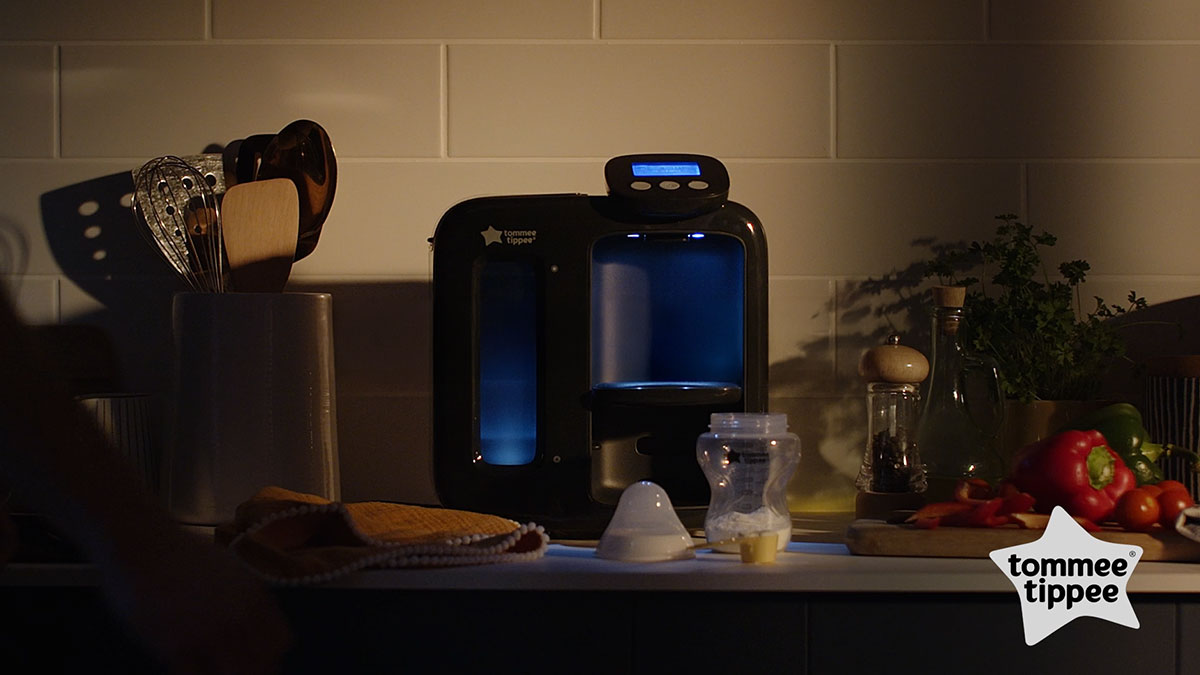
Tommee Tippee had accumulated years of visual assets — product photography, lifestyle imagery, campaign material, legacy content from previous brand iterations — and none of it was properly organised. Their DAM was more of a digital dumping ground than a strategic asset library. Finding the right image for a campaign meant trawling through folders, guessing at filenames, and hoping someone remembered where things were saved. It was costing time on every single brief. Beyond the organisational problem, they needed a content production model that could flex across markets. Tommee Tippee operates internationally, and each market has different requirements — different languages, different cultural sensitivities, different retail environments. The existing model of producing bespoke content per market wasn't scaling, and repurposing UK assets wholesale wasn't landing.
£120K per annum engagement
The approach
How I tackled it
I started with the DAM itself — sorting, categorising, and structuring their owned and legacy visual assets into a taxonomy that actually reflected how their teams needed to find and use content. Once the structure was in place, I assessed the feasibility of computer vision classification to automate ongoing categorisation. The goal was to make the DAM self-organising over time, reducing the manual overhead of tagging and filing as new assets were created. For content production, I built a pipeline that handled both BAU campaigns and NPD launches with multi-market flexibility baked in from the start. Rather than producing for one market and adapting, the workflow was designed to generate localised variants as a native output. This meant market teams got content that felt local without the cost and coordination overhead of separate productions.
Results
By the numbers
DAM retrieval time saved
Localisation cost reduction
Markets served
What was delivered
Outcomes
The Tommee Tippee engagement is one I’m particularly proud of because it’s a proper end-to-end transformation, not a one-off project. When I first looked at their DAM, it was the kind of mess that accumulates naturally over years — nobody made a conscious decision to let it get disorganised, it just happened because nobody had the time or mandate to fix it. That’s common. Most brands I work with have the same problem; they just don’t always realise how much it’s costing them.
The computer vision piece is where it gets interesting. Manually tagging and categorising assets is one of those tasks that every team knows is important but nobody wants to do. Automating that classification — even partially — changes the economics of asset management. It turns the DAM from a cost centre into something that genuinely accelerates production.
The retained nature of the engagement reflects something I think is important: this kind of work doesn’t stop. Markets evolve, products launch, brand guidelines shift. Having someone who understands the system and the strategy — not just the tools — means Tommee Tippee can move quickly without losing consistency.
- → Complete DAM restructure with consistent taxonomy and metadata standards
- → Computer vision classification feasibility validated and scoped for implementation
- → Localised content generation pipeline serving multiple international markets
- → BAU and NPD campaign workflows consolidated into a single flexible system
- → Retained engagement at £120K per annum reflecting ongoing strategic value
Related thinking
From the journal
Is Google's Nano Banana 2 Dropping This Week?
19 November 2025

Unilever Scales Their AI Content Factory with IPG - So What Does Product Photography Look Like in the Future?
12 September 2025

Nano-Banana - Google's New Mystery Model: Why All the Content You're Seeing Is 'Like That'
27 August 2025
Facing a similar challenge?
Every engagement starts with understanding where you are and where you want to be. No pitch deck required.