The script’s been flipped
Unilever’s just flipped the script on content capture. It’s been in the works for a while (2022) - but they’re now scaling the rollout to 22 global markets.
Like every other brand, they’ve gone from requesting ‘20 assets per campaign to 400 assets per product’. That’s not a gradual evolution - that’s a complete transformation in how we need to think about visual content generation.
And not just across a single product either. It’s across 22 markets, for brands like Dove, TRESemme, and Vaseline - concurrently. This used to require 3000 agencies and just as many production facilities to service this volume constantly.
This is NOT a “3000 agencies to none, in 15 mins, just using AI, for £6” type of article. Trust me, it’s definitely not.
What Unilever are actually doing
Unilever are not replacing ‘product photography’ completely. Nor are they suggesting that AI is gonna be the end-to-end solution for ecom and social comms. They’re augmenting traditional processes with ‘AI assembly lines’ that increase the pace of creation and remove some of the wasted time in the product photography process.
They’re also building the ability to increase output volumes, lower carbon emissions, and reduce the brand inconsistencies generated by having 3000+ agencies and production facilities working on your content at the same time.
And this is all still run in conjunction with their agencies.
How hybrid production works
I know because we’re doing the same thing. We’re calling it “hybrid production”. And for product or ecom (BTL) content, we’re taking creative expertise and aligning it with “agentic production”. This is content scale in a box.
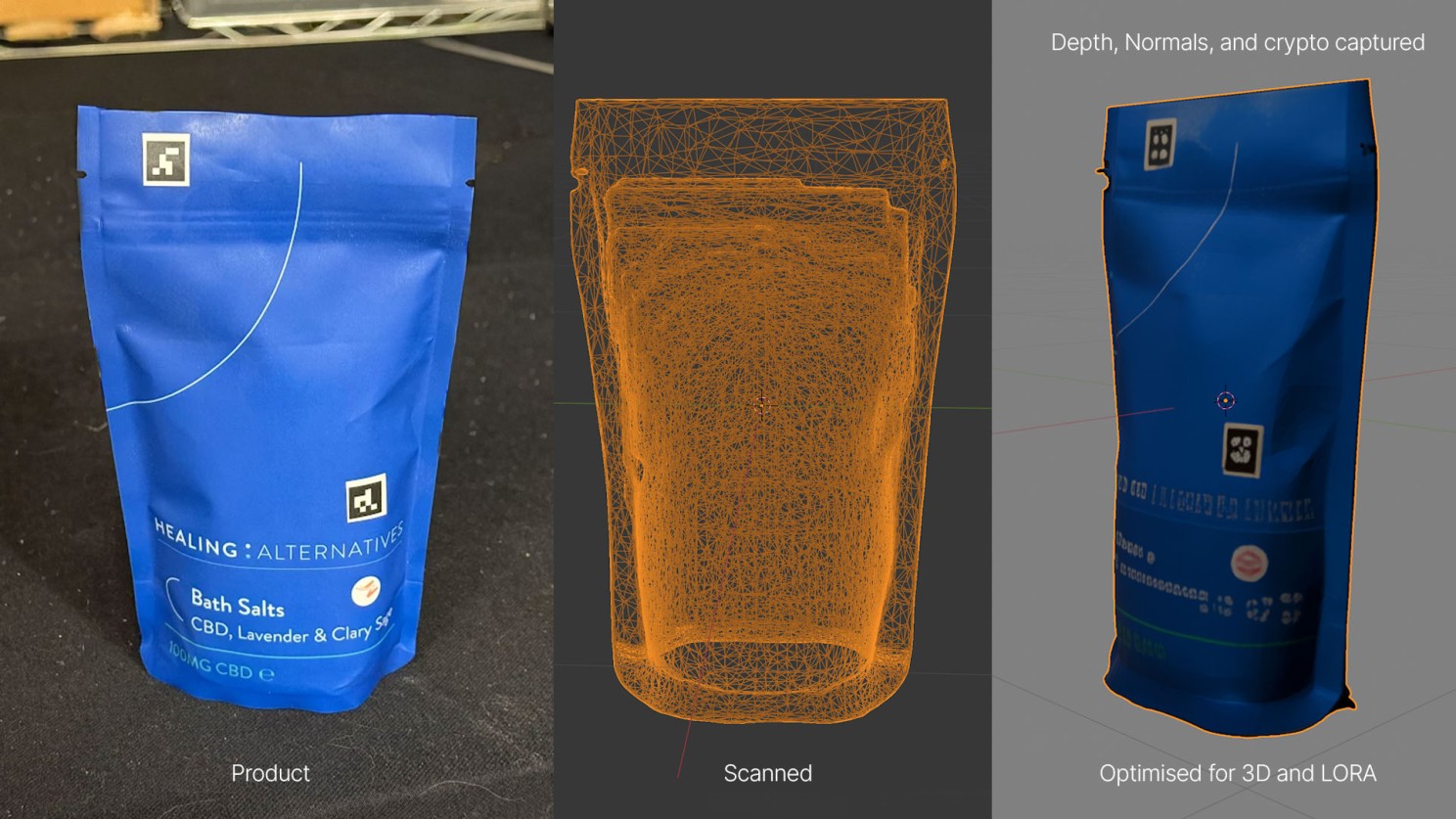
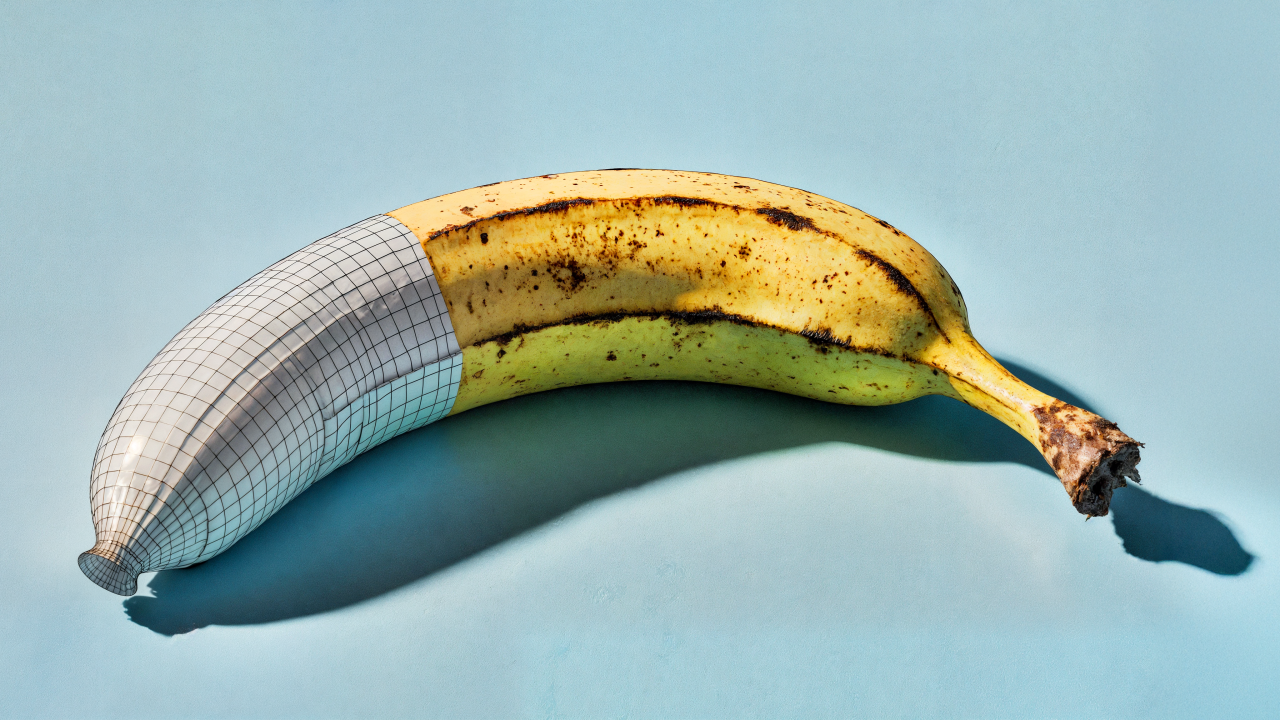
We start with virtual products. Not just 3D models - but virtual facsimiles of the physical products. These are subject to the same volume, materials, physics, environments, and lighting parameters that the REAL one would have. These are not CGI models, they’re slightly different. They are “digital twins”.
We combine these digital twins with living brand guidelines - essentially AI brand control systems (LORAs and fine tuning) - that dictate HOW this digital twin reacts to a specific context.
We now have the capacity to generate (and regenerate) digital facsimile assets in context, in realtime, ready for distribution.
”Ah but AI can never…”
Let me just stop you there.
AI is not a binary thing. Or a younger faster content creator. It’s a new process, a new approach, and a new way of working for creatives. It’s giving you the chance to generate realtime, scalable experiences that have not been seen before (or financially viable) in the traditional constraints of the brief.
For us, this is the “power of scale” in a smaller and more creatively charged team.
Why Unilever, and what about IPG?
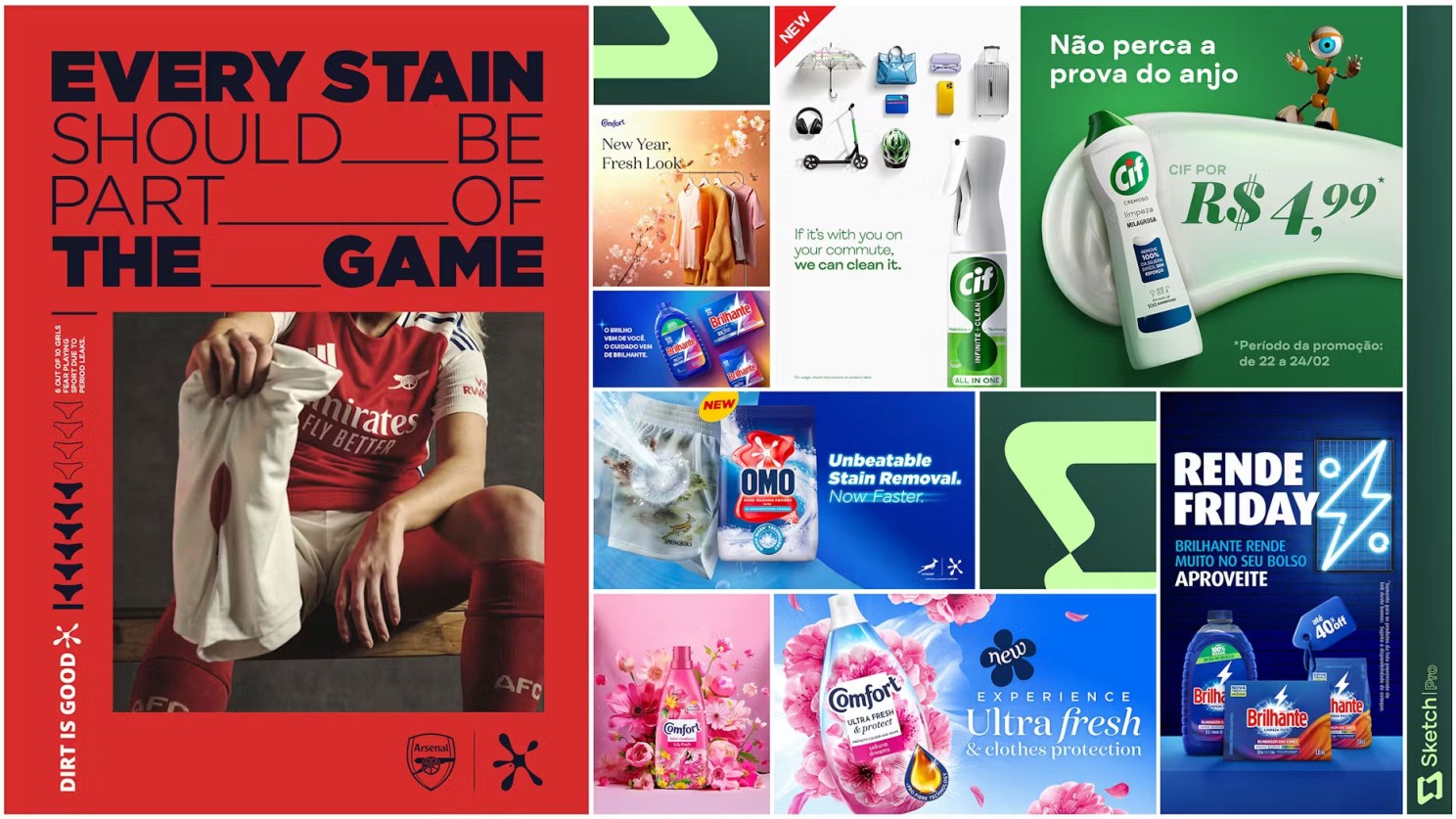
When you’re spending £7.8 billion annually on marketing like Unilever, efficiency isn’t just nice to have - it’s essential. Their ‘Sketch Pro AI Studio’ is producing content 65% faster whilst doubling video completion rates and click-through rates - because the evolution feedback loop is SO much faster to deal with. It’s iterative, and cumulative.
They’re using digital twinning for product-focused content, and applying narrative, context, and seasonality into the mix as they’ve always done. This approach isn’t new. What’s new is the power to link so many facets of this together, and benefit from the collective time saved in a single framework to expand on the creative experience.
And this isn’t just IPG either. Other major ‘networked’ players like WPP, DDB, and Havas are all investing heavily in AI-enabled production solutions to sit alongside agency activities. But what they’re really doing is focusing on what matters most in the ecommerce ecosystem: product content, product content with context, product variables like colour and size, and related items with shared purchase relationships.
The smart agencies are treating BTL content as CPA-aligned strategies. The value of a BTL asset can be huge if it’s triggering ‘behaviour change’ at a crucial moment in the customer journey. And linking the ability to apply real-time personalisation to this content generation is the new win with your production partner. That’s genuinely gold dust.
The hybrid production revolution - what’s beyond digital twinning?
Think of this like an F1 car - the harder you push the system, the better the system performs. That’s exactly how modern AI-augmented production works. The more you evolve and put into the hybrid system, the more consistent (and creative) the results you get out.
We’re not talking about robots running end-to-end here. It’s about building pipelines that accelerate the process bits and protecting the brand bits. The difference between 3D geometry, imagery, and video is just a couple of nodes now. AI system architecture and capabilities are constantly changing, but they’re all overlapping to create incredible efficiencies.
So what’s “hybrid” about this production approach?
It’s mixing the production approaches of several distinctive pipelines, and interconnecting the advantages and flexibilities of each. AND it’s not just digital either.
When AI can’t deliver what you need “great”, you’ve got options: shoot the solution, CGI the solution, or VFX the solution. It’s about finding these faults, and using hybrid production pipelines to rectify them - then building this solution into the framework for the future.
Dynamic living brand guidelines - the new creative paradigm
Unilever’s “BrandDNAi” approach shows where we’re heading. Briefing using traditional brand books can’t handle AI-scale personalisation, disparate sources, and volume demand for content. You need AI tools that can retrieve brand guidelines, geographic and cultural nuances, and regulatory compliance whilst providing proper compliance to the generative processes.
You can’t build these pipelines on a project-by-project basis, and you can’t train ‘consistency’ on single sources. We have to let the F1 tyres warm up first.
The numbers tell the story
Organisations need 4x more content than just three years ago, with 60% of marketers needing at least one piece of content daily. Traditional production uses only 20% of budget for creating content variations - the formats conversation at the end of a typical production brief.
We need to stop thinking about production as linear assets. In the digital twin world, the product is “always available” and always on set. The pipeline for content generation, variation, and platform-specific evolution is so much quicker than traditional fragmented processes.
The role of BTL content capture and control is destined to follow a hybrid production approach before next year.
I’m a student - what skills matter in the future?
Understanding how to see the final output as a digital and physical entity - which is why most VFX supervisors come from compositing backgrounds. Backing the fundamentals of art, commercial expectations, and technical fluency in hybrid systems. When you go to a restaurant you don’t care how many chefs are in the kitchen, provided the food is as expected and on time - why does it matter? Equally, it doesn’t matter which oven, fridge, or food whisk they’re using - but they care. If the oven is capable of doubling capacity, this is a huge win for the restaurant and the customer.
Major CPG brands like General Motors, Mondelez, and Coca-Cola are already outsourcing AI production capabilities to agencies and production partners rather than bringing them in-house. But in the long term, agencies might find themselves asked to “work with and hand over” to in-house units as we do with other forms of serviceable data.
The bottom line
Unilever was spending £7.8 billion annually, and they’ve already made the shift across 22 brands. GroupM estimates 90% of digital campaigns will be influenced by AI by 2027 (I think this will be 2026). The question isn’t whether AI will transform content production - it’s whether your agency will be aligned to capitalise on these opportunities when they arise.