The reality check
It does feel daunting and extremely intense to work in the AI space. The scale, speed, opportunity, and bullsh*t can be overwhelming. You need an inquisitive but pessimistic head on your shoulders to wade through these innovations and find the true commercial opportunity. There will be a LOT of “dot com” bubble surrounding this area - and trusted foundations can be the difference between acceleration and stagnation.
But let’s be clear - the commercial world is being completely restructured through the lens of AI integration.
What’s particularly interesting isn’t just the tech itself, but the people, processes, and approach that’s sitting around it. This needs a new seat at the boardroom table. The “AI management consultant” is someone who bridges the gap between cutting-edge AI capabilities (tech and futurism) and practical commercial knowledge, experience, risk, finance, strategy, structure, and implementation.
The numbers don’t lie
Looking at the data from Indeed’s Hiring Lab, job postings mentioning generative AI have rocketed up by 170% in just two years (Jan 2023 - Jan 2025) in the UK. What’s really telling is that “generative AI consultancy” roles now make up 12.4% of these AI-related postings, compared to a tiny 0.2% the previous year.
This shift tells us something fundamental is happening. We’re through the experimental phase of AI. We’re into something much more serious - actual business integration.
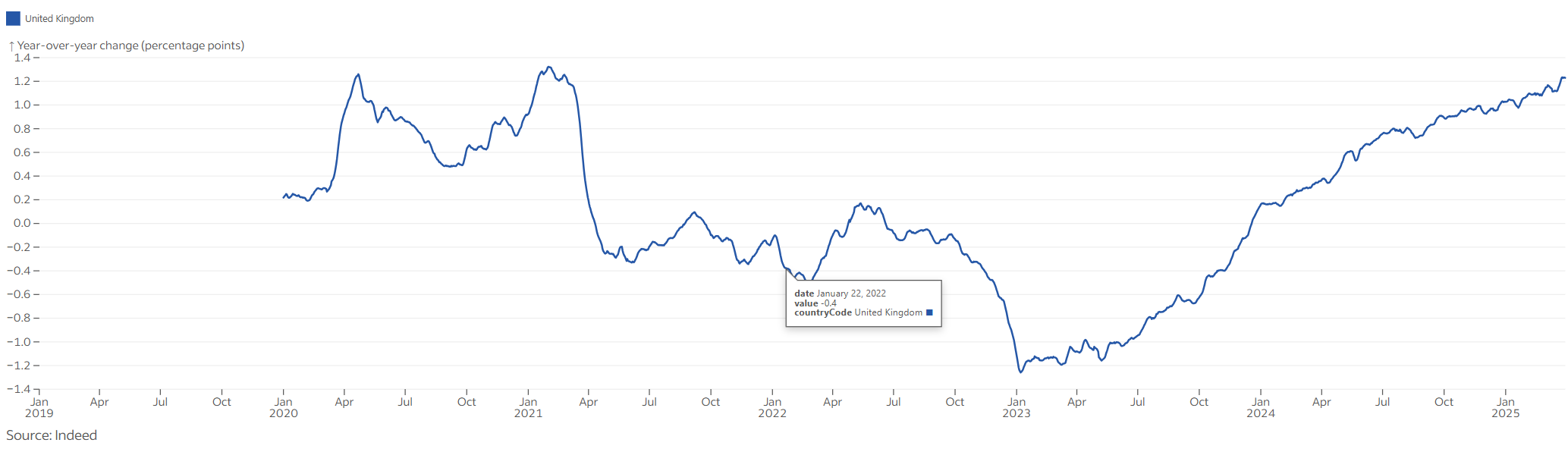
As Cory Stahle from Indeed’s Hiring Lab puts it, this represents “the next jobs to see major increases in GenAI expectations are outside of tech and data science” - these are hybrid roles with a key heritage in a sector or industry plus AI competencies.
The internal expertise gap is widening
If you’re running a consultancy or heading up strategy at an agency or brand, this trend should absolutely be on your radar. The companies that can successfully integrate AI aren’t just developing it anymore - they’re building structures to safely and successfully handle automation and AI in ways that will transform operations, marketing, and sales.
But finding full-time “experts” (that are beyond the LinkedIn hype) that can actually deliver on the expectations of commercial AI integration isn’t easy, and full-time support is almost impossible.
HBR suggests a widening performance gap between AI leaders and the rest. The top-performing companies are seeing performance levels 3.8x higher than the bottom half, up from 2.7x from 2022, and this advantage compounds over time as these leaders build differentiated capabilities.
Restructuring is brutal
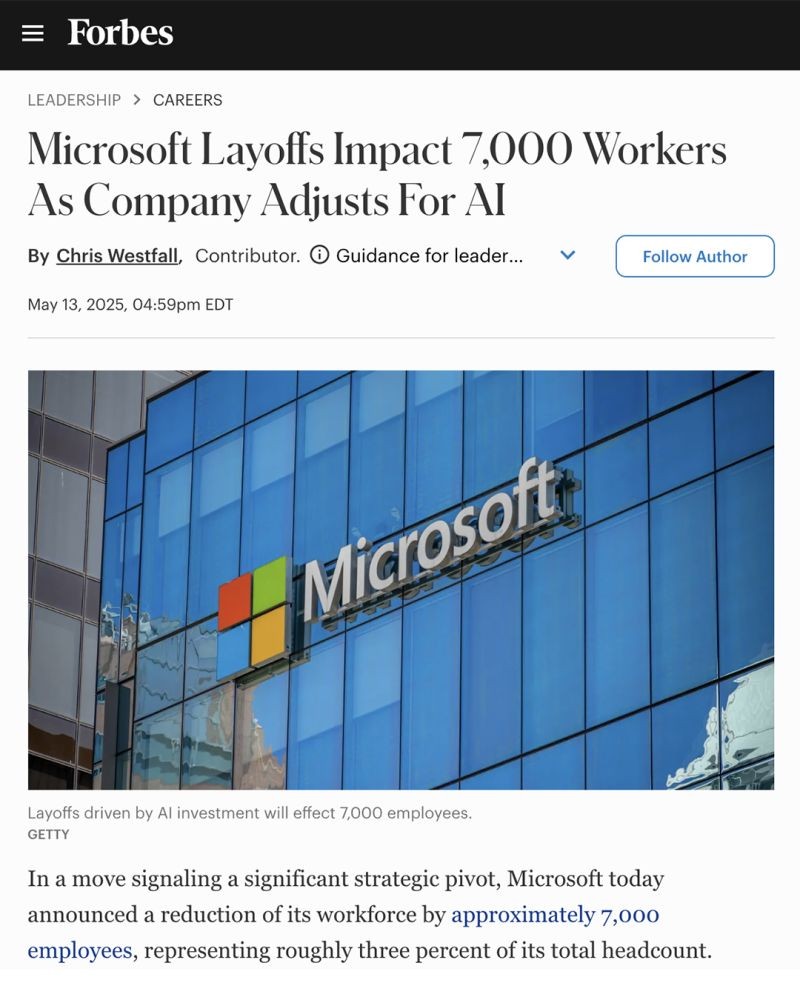
Tech giants are dramatically reshaping their organisations to position for an AI-dominated future. Microsoft recently announced a significant restructuring, cutting approximately 7,000 jobs (about 3% of its workforce) despite record profits and massive AI investments.
Interestingly, these cuts weren’t primarily performance-related but rather part of a strategic realignment to “flatten management layers and boost efficiency”.
What’s particularly telling is that the layoffs targeted developers, some managers, and even workers assigned to AI projects. This counterintuitive move - cutting AI staff while simultaneously investing $80 billion in AI for 2025 - reveals something important: even as companies embrace AI, they’re reconsidering what human roles are truly essential in this new landscape.
The restructuring reflects Microsoft’s “broader effort to control expenses while advancing its investments in AI”, suggesting that even the most AI-bullish companies are carefully evaluating how to balance human expertise with AI operationally.
AI isn’t just about adding new technology - it’s deeper than that.
The reality of upskilling
Despite the clear importance of AI, there’s a troubling skills gap that is REALLY tough to address. While half of blue-chip workers received some form of training last year (2024), only 12% learned anything about AI tools or technology. This disconnect is glaring when more than a third of professionals recognise that AI skills are “extremely or very important for workers today.”
Beyond the skills gap lies another critical issue: active resistance to AI integration.
A Kin + Carta report (2024) said a staggering 94% of senior business leaders suffer from technology anxiety, particularly around AI and machine learning. This resistance isn’t simply fear of technology itself - it’s often rooted in feelings of exclusion, undervalued expertise, or uncertainty about the future. There’s a common misconception that AI tools are rigid (us or them) and unable to evolve alongside human workers.
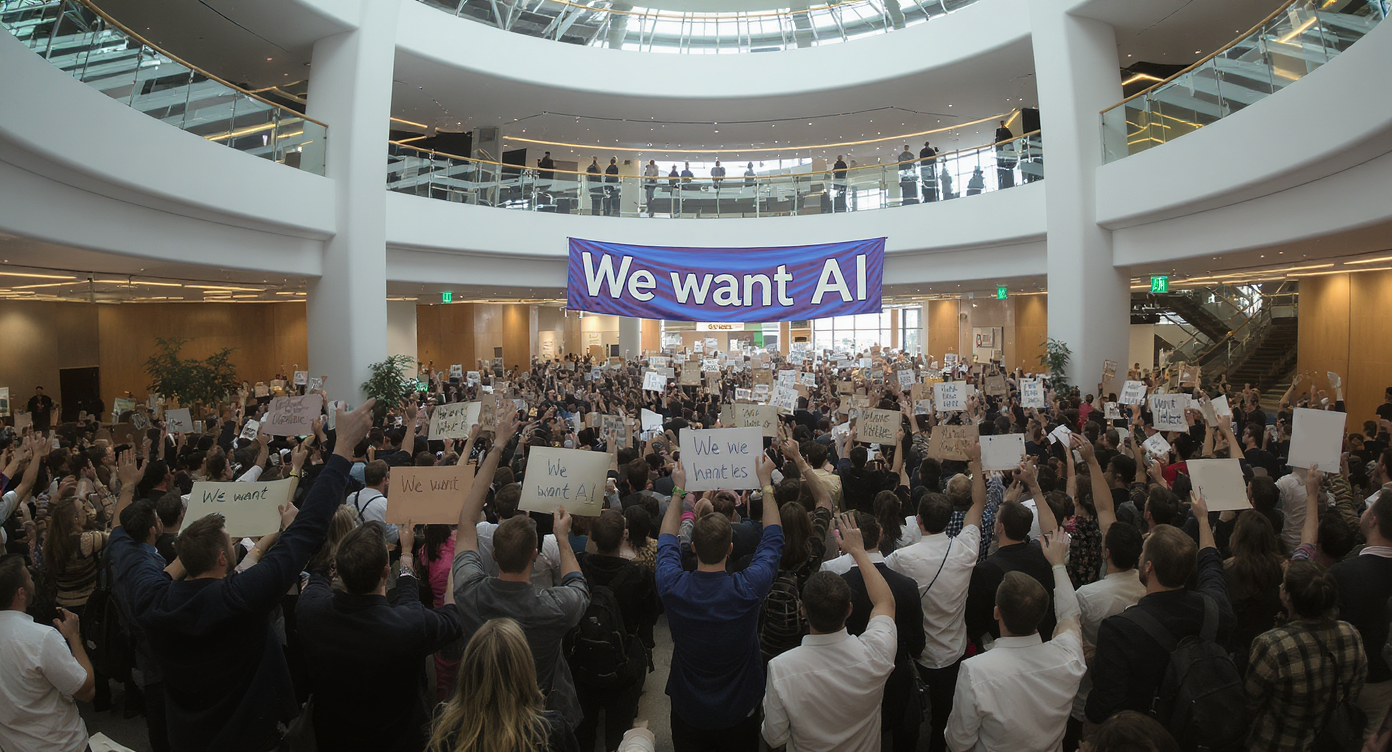
The World Economic Forum emphasises that AI should work alongside human workers, not replace them - but achieving this balance requires strategic investment in people and process.
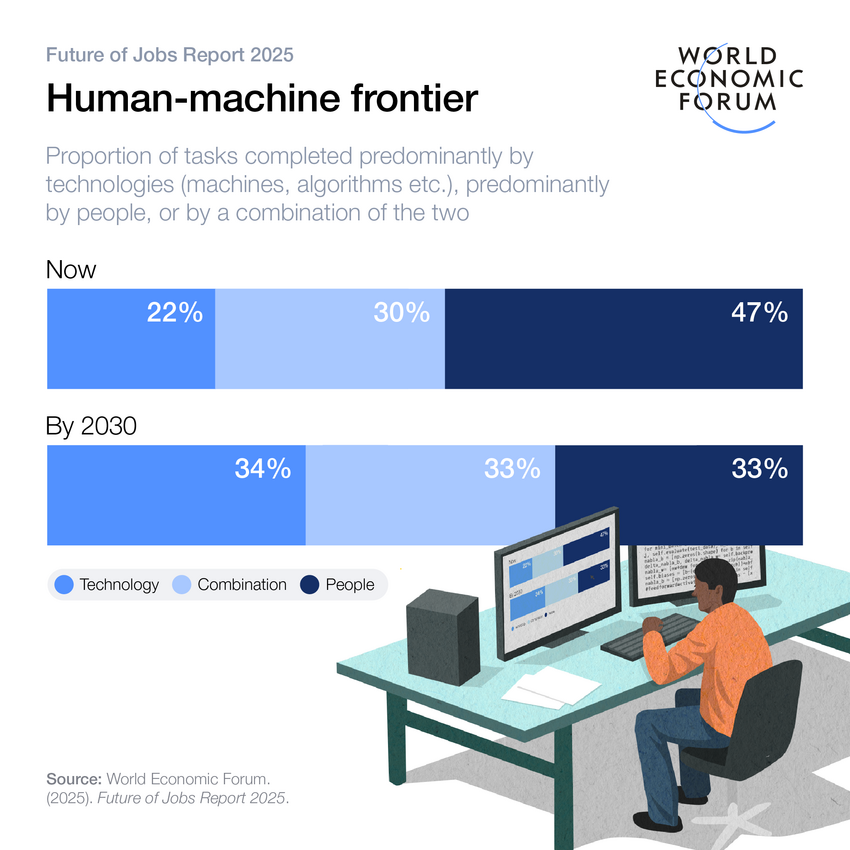
This is precisely why effective change management strategies are essential in AI integration - and something that’s become part of the process in any major commercial AI integration strategy.
The most successful implementations begin with education, fun, and exploratory freedom, followed by clear communication about how AI will augment rather than replace human capabilities.
How to approach AI integration strategically
For the C-suite team, it’s worth considering a different framework for integrating AI. Treat AI as “a new kind of talent pool” rather than just another technology implementation.
In practical terms, this means looking at AI as billable roles. It’s there to enhance and accelerate the thought and actions - but honestly, it’s SO much more than summarising meetings, synthesising and discovery of initial research, drafting initial frameworks and content, and running analyses. But this is the start.
I used to love working with charcoal as a painting medium, and to kill complacency and anxiety bias, I’d always start off the same way. Cover the canvas in paint, charcoal, or whatever. Immerse yourself in the medium without prejudice, and just explore the medium, and only then start to carve out the structure from there.
Integration is where the magic happens
For smaller agencies wondering how to start, it’s not about wholesale transformation overnight. And it’s not your job to BECOME the AI ambassador either - just as the board mitigates bias by investing in NEDs and specialist advisors, you need to be comfortable investing in AI consultants to mitigate risk and support strategic analysis all the way through to implementation and “future visions”. It’s about finding the right balance where AI enhances the team’s capabilities without compromising what makes your business distinctive.
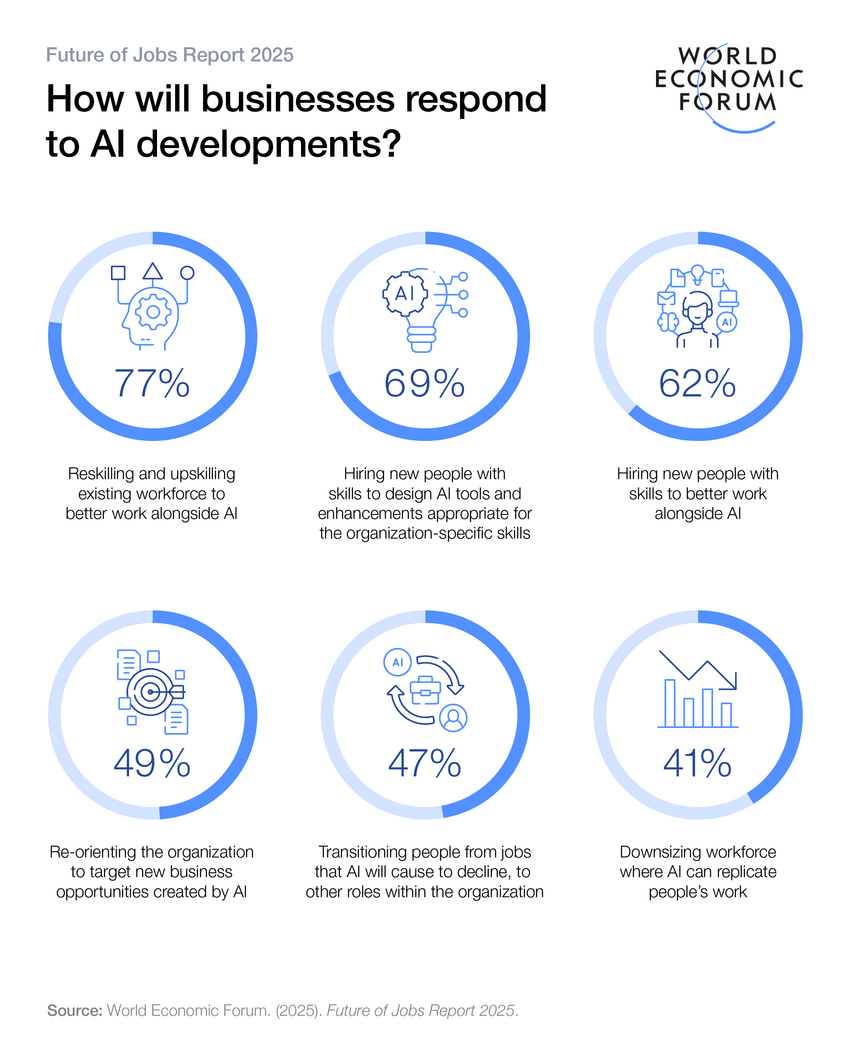
In 2025, the question isn’t whether to use AI, but how to integrate it while preserving your unique perspective and creative voice.
For forward-thinking leaders, this presents both a challenge and an opportunity to reimagine how their organisations operate in an AI-enhanced world - not just from a tech angle now, but also their CVP into the future. The time to build this expertise isn’t coming - it’s already here.